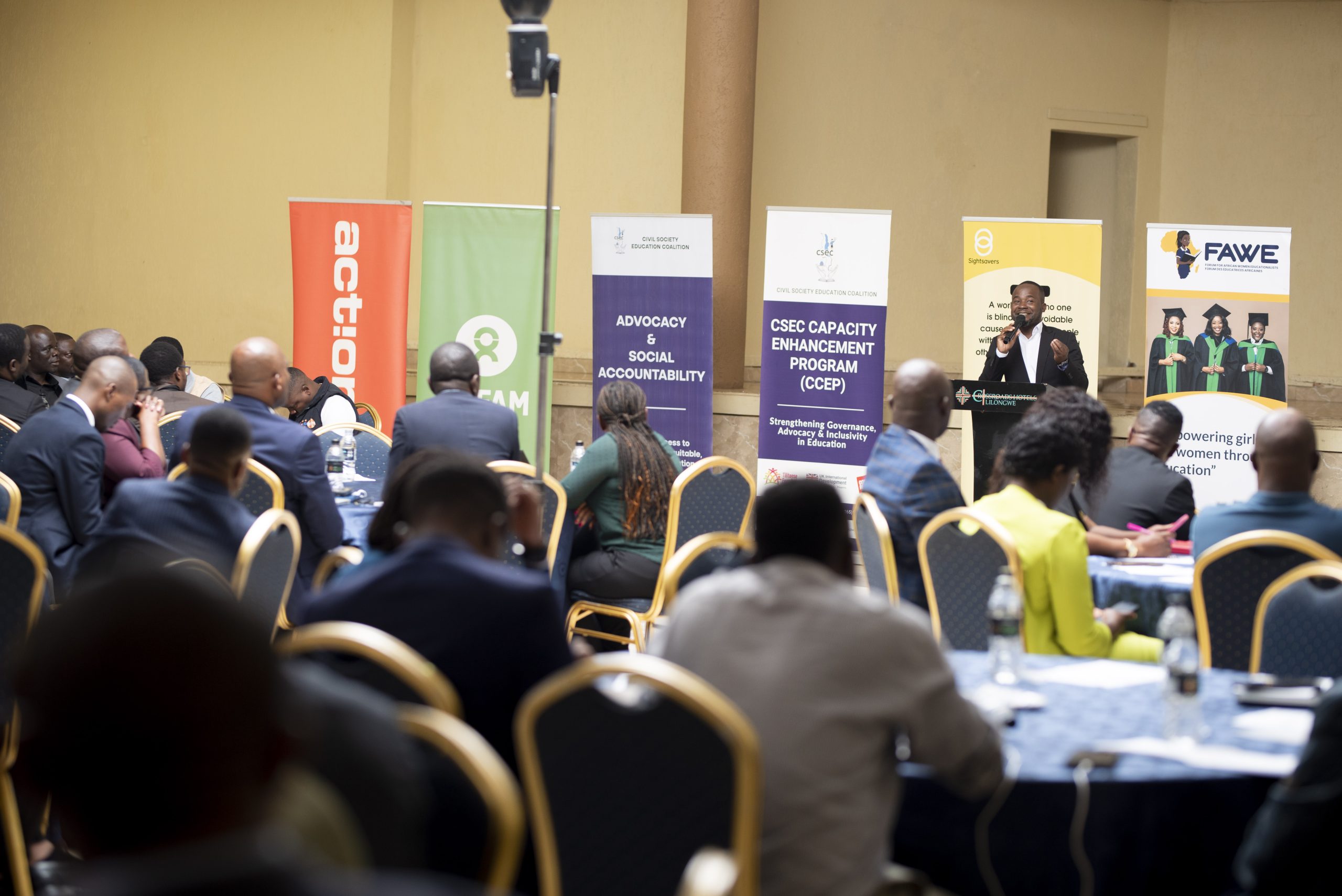
A coalition of civil society organisations led by the Civil Society Education Coalition (CSEC), alongside ActionAid Malawi, Oxfam in Malawi, Forum for African Women Educationalists in Malawi (FAWEMA), and Sightsavers, has engaged Members of Parliament from the Budget and Finance as well as Education Cluster Committees to advocate for increased financing for the education sector in the 2026/27 National Budget.
The parliamentary engagement, organised by CSEC and its partners, took place on Monday evening at Crossroads Hotel. The meeting aimed to present findings from a recent education budget tracking and analysis exercise and provide parliamentarians with evidence on the financing challenges facing the education sector.
The engagement comes at a critical time as Parliament prepares to deliberate on the national budget that was recently presented in the House.
Evidence-Based Advocacy for Education Financing
Speaking during the official opening of the engagement, CSEC Executive Director Benedicto Kondowe emphasised the importance of investing more resources in education to strengthen human capital development and advance the country’s long-term development goals.
Education is the foundation for human capital development and a key pathway to achieving the Malawi 2063 Agenda. This is why we are calling on Members of Parliament to budget for the future of this country by increasing resource allocation to the education sector,” said Kondowe.
Kondowe highlighted that the expanded Constituency Development Fund (CDF) presents an important opportunity for Members of Parliament to invest in education and address long-standing structural challenges affecting schools across the country.
“The 10 percent allocation we are proposing should be directed toward addressing learning challenges, because education is one of the key drivers for achieving the Malawi 2063 Vision,” he explained.
He further stressed that increased financing must translate into tangible improvements in schools.
“Education financing should not just be mere numbers in the national budget; it should reflect what is actually available and making a difference in the classroom,” he added.
Findings from Education Budget Tracking Exercise
During the meeting, the coalition shared findings from an education expenditure tracking exercise conducted in six districts: Balaka, Mchinji, Mzimba, Lilongwe, Ntcheu, and Machinga. The initiative was implemented by CSEC in partnership with ActionAid Malawi, Oxfam in Malawi, Sightsavers, and FAWEMA to strengthen transparency and accountability in education financing.
The analysis of the 2025/2026 education budget revealed that 77 percent of the allocated funds had been disbursed. However, despite this progress, significant financing gaps remain that continue to hinder effective service delivery in the education sector.
The findings also showed that the proposed K1.3 trillion education budget for the 2026/2027 financial year remains insufficient to meet the international benchmark of allocating at least 20 percent of the national budget to education as recommended by UNESCO.
The coalition therefore urged Members of Parliament to consider allocating 10 percent of the K500 billion Constituency Development Fund per constituency toward education investments.
Persistent Challenges in Schools
According to the findings shared during the meeting, schools across the six districts continue to face numerous challenges that undermine effective teaching and learning. These include overcrowded classrooms, inadequate sanitation facilities, shortages of teaching and learning materials, and deteriorating school infrastructure.
Addressing these challenges, stakeholders noted, requires both increased investment and stronger oversight to ensure resources reach schools and are used effectively.
Government and Parliamentary Support
Director of Secondary Education Ruth Samati Kambali supported the proposal for increased financing, noting that the Ministry of Education is advocating for an even higher allocation of 20 percent of the Constituency Development Fund to education.
“We must join hands in pushing for increased funding to achieve better outcomes, particularly in expanding access and equity to basic and secondary education,” she said.
Chairperson of the Parliamentary Committee on Education Mutani Tambala also welcomed the engagement, noting that the expanded CDF could play a significant role in improving education standards alongside other priority sectors.
“All relevant stakeholders must get involved and play their roles responsibly, while ensuring effective oversight,” Tambala said.
She further emphasised that the education sector remains central to achieving the country’s long-term development aspirations under Malawi 2063, which places human capital development as a top national priority.
Advocating for Inclusive and Gender-Responsive Education
As part of the coalition’s advocacy efforts, ActionAid Malawi also highlighted the need for increased investment in Early Childhood Development (ECD), which has experienced a significant reduction in the proposed 2026/27 national budget.
The organisation is also advocating for stronger financing of gender-responsive public education programmes to address persistent challenges such as early marriages and teenage pregnancies that continue to disrupt girls’ education.
Strengthening Collaboration for Education Reform
The parliamentary engagement provided a critical platform for dialogue between civil society organisations, policymakers, and education stakeholders to ensure that budget decisions reflect the realities faced in schools across the country.
By presenting evidence-based findings and practical recommendations, the coalition aims to support Parliament in making informed decisions that will strengthen education financing, improve service delivery, and ensure equitable access to quality education for all learners in Malawi.
Leave a Reply